Your backyard is too hot to use from May through October. A properly installed solid-roof patio cover changes that - giving you a shaded outdoor space you can actually enjoy, with permits handled and your HOA kept in the loop.
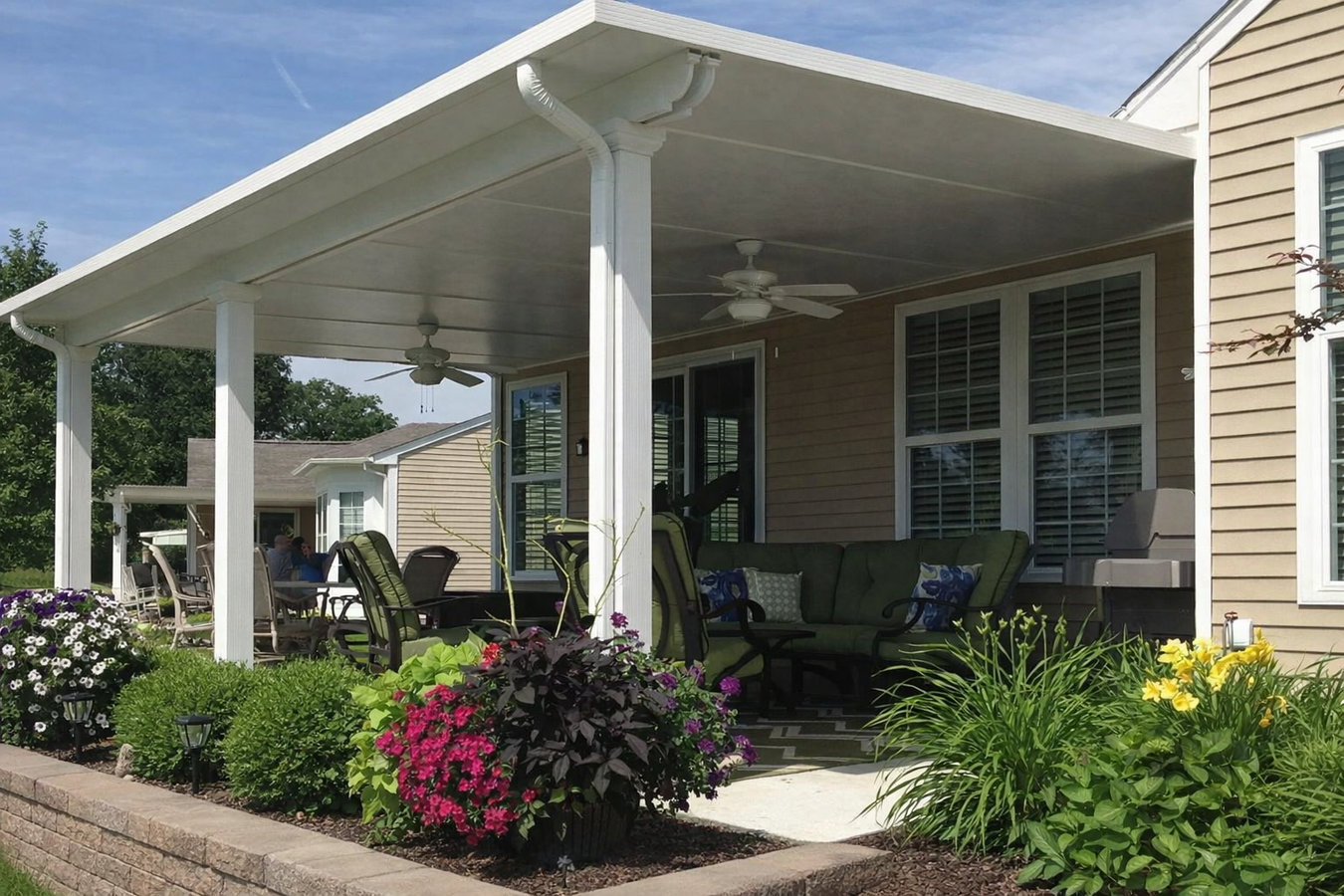
Patio cover installation in Moreno Valley attaches a permanent, roof-like structure to the back of your home that shades your outdoor space and makes it usable even on the hottest days. Standard installation on an existing patio takes one to three days once materials are on-site, though the permit process with the City of Moreno Valley typically adds two to four weeks before work can begin.
A patio cover is not just a nice aesthetic upgrade - in Moreno Valley, where summer temperatures regularly push into the triple digits, it is the difference between a backyard you use and one you avoid from June through September. Most homeowners choose between a solid-roof cover, which blocks sun and rain completely, and a lattice design, which filters light and gives a more open feel. In this climate, solid covers with insulated panels are the more practical choice for anyone who wants to actually spend time outside during the hot months. For homeowners who want walls added and the space fully enclosed, a sunroom design consultation or a full patio enclosure may be the better next step.
The California Contractors State License Board requires any contractor doing this type of work to hold a current state license - a quick verification step that protects you before you sign anything.
If you walk outside between May and October and immediately turn around because of the heat, that is the clearest sign a patio cover would change how you live in your home. Moreno Valley's summer heat is intense enough that an unshaded patio can feel oppressive by mid-morning. A solid-roof cover drops the temperature of the space underneath and makes outdoor time genuinely comfortable again - even in peak summer.
The combination of intense UV exposure and heat in the Inland Empire breaks down outdoor furniture, cushions, and even concrete surfaces faster than in coastal areas. If you are replacing cushions every season or noticing your patio surface is cracking and discoloring, direct sun exposure is likely the cause. A patio cover protects your investment in outdoor furniture and extends the life of your patio surface.
Ceiling fans and overhead lighting need a structure to attach to - you cannot hang them from open sky. If you have been putting off creating a real outdoor living space because there is no overhead structure, a patio cover solves that problem. Fans, recessed lights, and even a mounted speaker can be added at the same time - and it is far cheaper to wire for them during installation than to retrofit later.
West- and south-facing back walls in Moreno Valley take a beating from afternoon sun, which drives up cooling costs and can fade flooring and furniture visible through glass doors. A patio cover that extends out from the house creates shade over those doors and windows during the hottest part of the day, reducing the heat load on your air conditioner and making a noticeable difference in your summer energy bills.
We install attached and freestanding patio covers throughout Moreno Valley, handling every part of the process from permit application through final city inspection. Every cover we install is anchored to your home's structural framing - not just bolted to the exterior stucco - because that connection is what determines whether the structure stays solid when Santa Ana winds arrive. We dig footings to the depth required by the city's permit for the post anchors, and we size the cover and its frame for the wind loads specific to this area of Riverside County. If you want ceiling fans, recessed lighting, or electrical outlets included, we coordinate that with a licensed electrician as part of the original installation so everything runs through the proper permit from day one.
For homeowners who want to go further and fully enclose the space, we also build sunroom designs that turn a covered patio into a genuine room, and complete patio enclosures that add walls and windows while keeping the outdoor feel. A patio cover is often the right first step - and we can design it so that adding walls later is straightforward rather than requiring the whole project to be redone.
The most popular choice in Moreno Valley - blocks direct sun completely and keeps the space underneath noticeably cooler than lattice or open designs.
Suits homeowners who want maximum shade and a more finished interior ceiling appearance, with panels that reduce heat transfer better than standard aluminum.
A good fit for homeowners who prefer filtered light and a more open aesthetic, and who primarily want shade rather than full sun blockage.
For homeowners who want ceiling fans, recessed lighting, or outdoor speakers - wired in during installation rather than added later at higher cost.
Moreno Valley sits in the Inland Empire, where summer temperatures are significantly hotter than the coast and Santa Ana wind events in fall and early winter can bring gusts strong enough to damage a cover that was not properly anchored. The clay-heavy soils common throughout the area also affect how post footings must be designed - a footing that would hold up fine in stable soil may shift or crack here when seasonal moisture causes the ground to swell and shrink. These are not edge cases; they are conditions that show up in Moreno Valley regularly, and a contractor who is familiar with the city and the region will design for them from the start rather than discovering them mid-project. The city's Building and Safety Division inspects work at key stages - which is actually to your benefit, because it means a third party is confirming the connections are built right.
We work throughout Moreno Valley and the surrounding area, including communities near Temecula to the south and neighborhoods close to Riverside to the west. A large share of Moreno Valley's housing stock was built in planned communities during the 1980s through the 2000s, and many of those neighborhoods have HOAs with specific rules about patio cover styles and colors. We know what most of these associations typically require, and we help you prepare the right documentation so the approval process goes smoothly.
We schedule a visit to measure your space and understand your goals - no accurate quote is possible without seeing your backyard. You will choose between cover styles (solid, insulated, or lattice) and decide whether you want any electrical add-ons. You leave with a written estimate that breaks down every cost.
We submit your HOA application and city permit application at the same time so you are not waiting on one before starting the other. HOA decisions typically come back within two to four weeks. City plan check review in Moreno Valley also runs two to four weeks. We track both and keep you updated.
The crew digs and pours footings for the posts, lets them set, then erects the frame and roof. Standard installations are complete within one to three days once work begins. You will need to clear the patio of furniture and potted plants before the crew arrives - we will remind you ahead of time.
A city inspector confirms the structure was built to plan and meets safety standards. After the inspection passes, we do a walkthrough, clean up the site, and walk you through any electrical systems if included. You receive copies of the permit and inspection sign-off for your records.
We respond to all inquiries within 1 business day. No obligation - just a clear, written estimate for your specific backyard and budget.
The ledger board - the piece that connects your cover to the house - must be anchored into structural framing to hold safely in Santa Ana wind conditions. We never attach solely to the exterior stucco. Every cover we install is connected to your home's wall framing, which is what the city inspector is checking when they sign off on the work.
Every patio cover we install in Moreno Valley goes through the city's full permit and inspection process. Unpermitted covers are one of the most common complications that arise during home sales in California - they can delay or kill a deal. A permitted cover is a documented asset; an unpermitted one is a disclosed liability.
Moreno Valley's clay soils expand and contract with seasonal moisture changes, which can shift or crack post footings that were not designed for it. We dig footings to the depth specified in the city's permit for the local soil profile - the same depth the inspector will verify. This is how a cover stays plumb and solid five years after installation, not just on day one.
We have worked with HOAs across Moreno Valley's planned communities and know what their architectural review committees typically require. We prepare the drawings and submit the application for you - the California Department of Real Estate's HOA information resources note that getting written approval before any work starts is the single most effective way to avoid post-installation disputes.
A patio cover looks simple from the outside, but the details that determine whether it holds up for 20 years - the footing depth, the ledger attachment, the permit documentation - are invisible once the job is done. We build to those details every time because we are working in the same community our customers live in.
Summer books up fast - lock in your installation date now and get your backyard ready before the heat arrives.