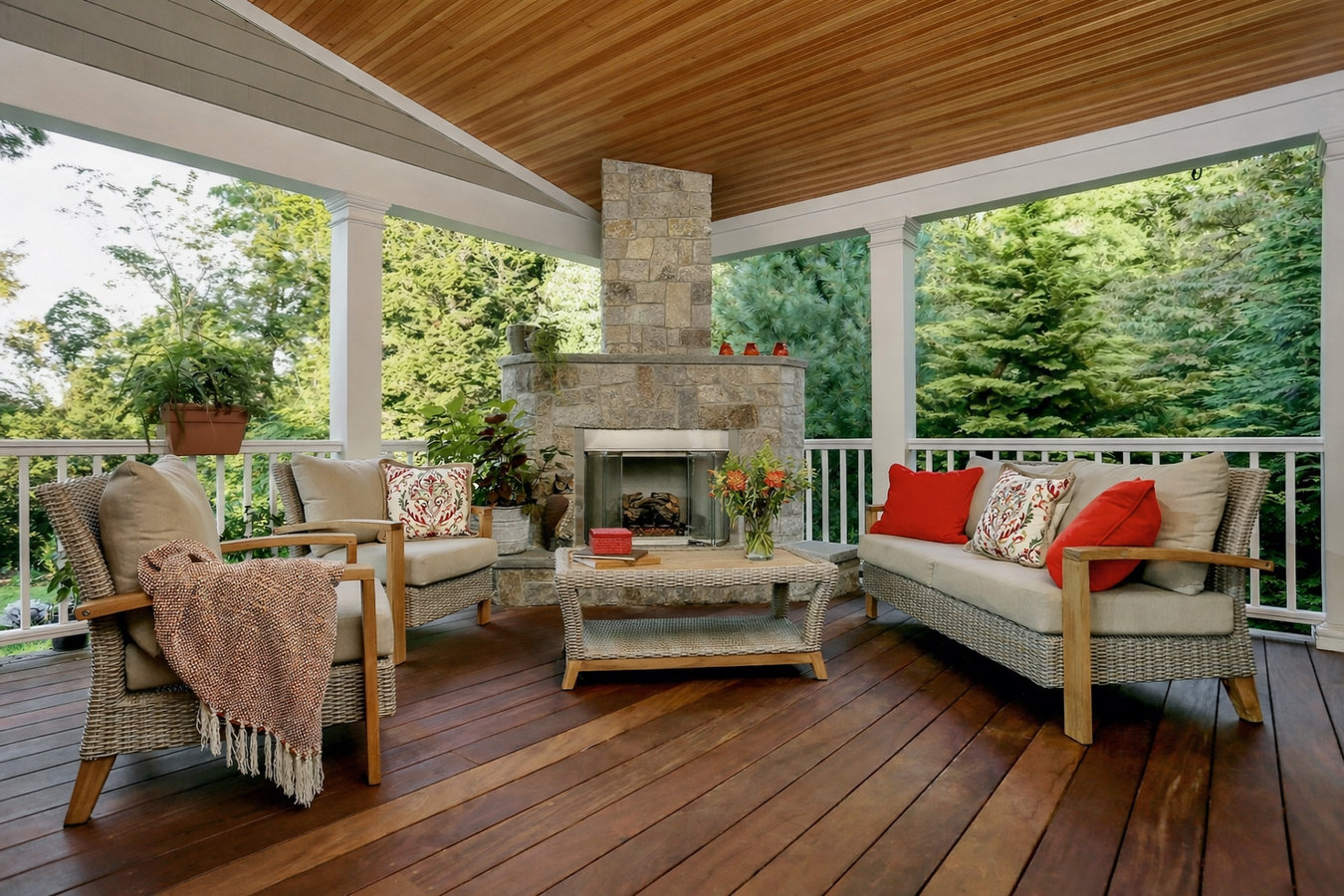
ViewPoint Moreno Valley Sunrooms builds four season sunrooms, patio enclosures, and custom room additions for Ontario homeowners, handling all permits, inspections, and construction from start to finish with free on-site estimates and same-week responses.
Ontario summers regularly exceed 100 degrees and Santa Ana winds arrive every fall, so a room that only works eight months of the year is a compromise most homeowners here cannot afford. Our four season sunrooms are insulated, climate-controlled, and engineered to handle Inland Empire heat and wind loads so you get a room that is genuinely comfortable every month of the year.
A large portion of Ontario homes from the 1960s through the early 2000s have existing concrete backyard slabs that have sat exposed for decades. A patio enclosure uses that slab as the floor - no new foundation required - and converts the open-air space into a protected room with walls, glazing, and a proper roof that keeps the heat and debris outside.
Ontario families who bought their homes in the 1990s and early 2000s often find they have outgrown the original floor plan. A permitted sunroom addition creates permanent heated and cooled square footage - a home office, a playroom, a year-round sitting space - that adds to your home's value without sacrificing any room you already use.
Ontario's housing stock runs from century-old Craftsman bungalows near Euclid Avenue to tile-roof tract homes built in the 1990s, and each property needs a design that matches its age and character. A custom sunroom lets you specify the glazing, roofline, framing material, and interior finishes so the new room looks like it was always part of the house.
Ontario backyards are effectively unusable from midday through late afternoon for three to four months of the year without shade. A solid or lattice aluminum patio cover extends the usable season without the cost of a full enclosure and can be built over an existing slab in a few days. It is also a practical first phase if you plan to enclose the space later.
Ontario's mild winters - with only occasional overnight lows near freezing - mean that a three-season sunroom works for the vast majority of the year. The uninsulated or lightly insulated construction costs less than a four-season room and is a practical choice for homeowners who want to enclose a patio on a tighter budget while still gaining a usable space for nine to ten months annually.
Ontario's housing stock spans nearly a century of construction, from the wood-frame and stucco Craftsman bungalows built in the 1920s near Euclid Avenue to the tile-roof stucco subdivisions built on the city's south and east sides in the late 1990s and early 2000s. That range matters for sunroom work because each era of construction brings different slab conditions, structural framing types, and setback patterns. A 1950s ranch home on a narrow lot has different challenges than a two-story tract home in a 1990s HOA community, and a contractor who has only worked with one type will cut corners with the other. Ontario's clay-heavy soils also move with the seasons - swelling with winter rain and shrinking in the summer heat - which puts every concrete slab in the city under slow, repeating stress. Before framing any new room, a proper slab assessment is not optional.
Ontario's summers are hot by any standard - temperatures above 100 degrees are common from June through September - and the Santa Ana wind events that hit every fall can drive gusts well above 50 mph through the Inland Empire. Both factors must be engineered into any permanent sunroom structure. The city also processes permits through its own Building and Safety Division, and understanding what plan checkers in this jurisdiction look for in residential addition applications is what keeps projects on schedule. Local knowledge at the permitting stage translates directly into fewer revision requests and shorter waits between approval and groundbreaking.
Our crew works throughout Ontario regularly, and we understand the local conditions that affect sunroom and enclosure work here. The city divides into clearly different zones - the older neighborhoods immediately north and east of downtown, where homes on tree-lined streets often have original stucco, aged concrete, and smaller rear yards, and the large-lot subdivisions on the city's south and east sides that were built rapidly in the 1990s and have standard tract layouts with room for a rear addition without the setback complications of older neighborhoods.
Ontario is easy to navigate by its main landmarks. Euclid Avenue runs north to south through the historic core and is one of the most recognizable streets in the Inland Empire, lined with a double row of pepper trees that has been there since the late 1800s. Ontario Mills is a major reference point on the south side of town along the 10 freeway, and Ontario International Airport sits near the center of the city and generates the kind of constant air traffic that residents on the west side hear daily. We have worked on homes throughout all of these areas - from the bungalow streets near downtown to the newer stucco tracts near the south end of town, all share the same basic clay-soil and heat challenges.
We also serve the broader area. If you are in Rancho Cucamonga to the north or Corona to the west, we cover those cities too and can confirm your address is within our service zone.
Call or submit the contact form with your Ontario address and a description of what you want to build. We reply within one business day to set up your on-site visit.
We visit your home, inspect the existing slab for clay-soil movement or cracking, measure rear and side setbacks against Ontario zoning, and assess your structure. You receive a detailed written estimate with a fixed price and no obligation to proceed.
Once you approve the estimate, we prepare permit drawings and file with the City of Ontario Building and Safety Division. We schedule your build start after permit approval and give you a clear construction timeline in advance.
Active construction on most Ontario projects takes two to four weeks. After final framing and finish work, we schedule the city's final inspection and walk through the completed room with you before closing out the permit.
We serve homeowners throughout Ontario, CA. Call us or submit the form and we will reply within one business day with a free on-site estimate.
Ontario is a city of about 185,000 people in San Bernardino County, roughly 35 miles east of downtown Los Angeles in the heart of the Inland Empire. The city grew in distinct waves: the earliest neighborhoods near Euclid Avenue date to the late 1800s and early 1900s, featuring Craftsman bungalows and Spanish Colonial Revival homes on tree-lined streets. The postwar decades brought ranch-style subdivisions across the central city, and the 1990s and early 2000s added large planned communities on the south and east sides. The result is a city where a 1925 bungalow and a 2002 stucco tract home can sit just a few miles apart, each with very different structural and maintenance needs.
Ontario is anchored by Ontario International Airport near the city's center, which serves the entire Inland Empire and handles some of the highest cargo volume of any airport in the western United States. Ontario Mills, one of the largest outlet malls in California, draws visitors from across the region to the south side of the city along the 10 freeway. The city's industrial base - including major warehouse and distribution facilities for logistics companies - makes it one of the busiest working cities in the Inland Empire, with a large share of residents who own their homes and have a real stake in keeping them maintained. Homeowners in Rancho Cucamonga to the north and Fontana to the east face many of the same climate and soil conditions as Ontario and are part of our regular service area.
We serve Ontario homeowners from the historic Euclid Avenue neighborhoods to the newer subdivisions on the south side. Call today or submit the form and we will be in touch within one business day.