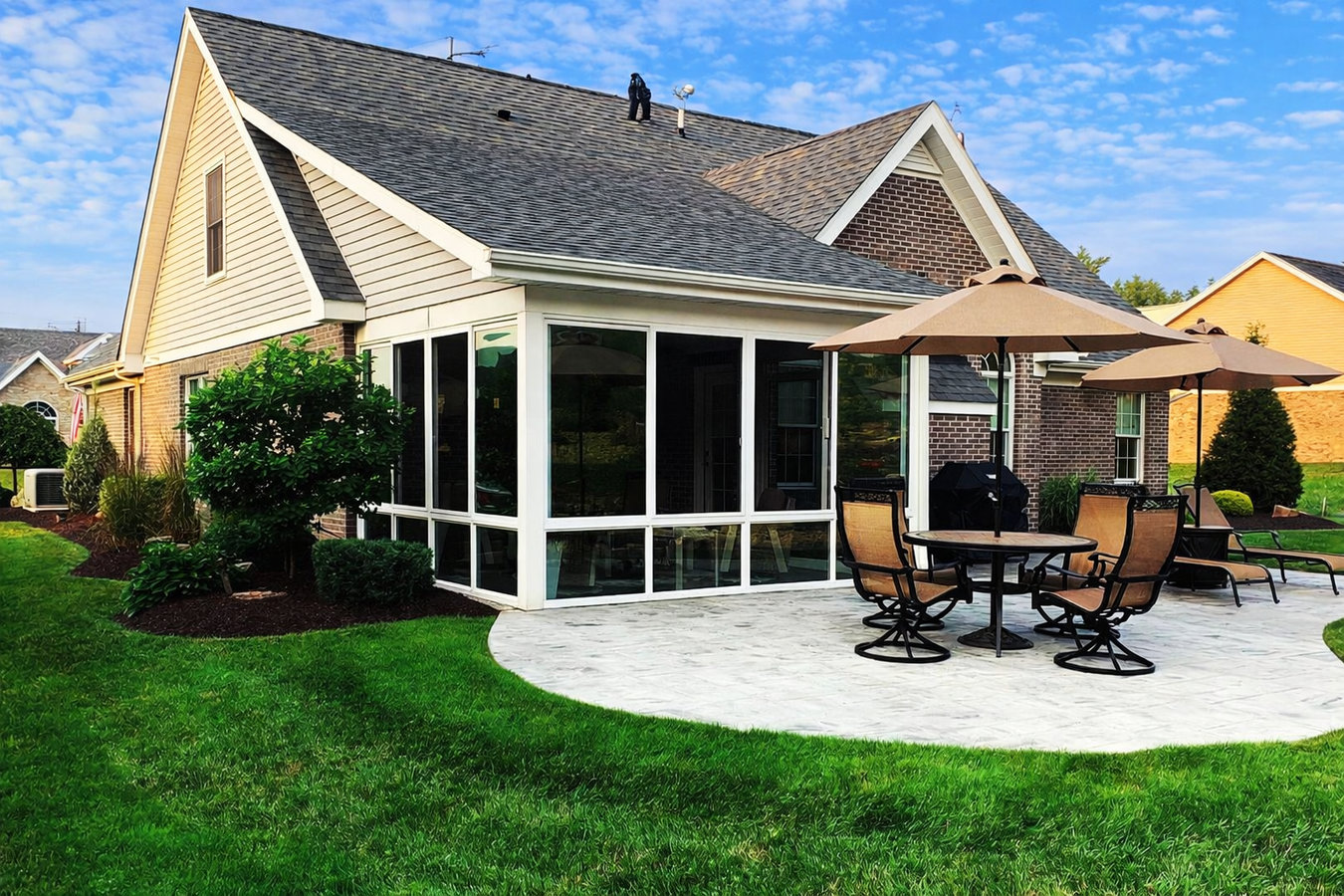
ViewPoint Moreno Valley Sunrooms builds patio enclosures, custom sunrooms, and screen rooms for Corona homeowners, with licensed construction, free estimates, and permit handling answered within one business day.
Most Corona homes built between 1980 and 2005 have concrete backyard patios on lots of 6,000 to 10,000 square feet - already large enough for a quality enclosure. Our patio enclosures service adds walls, glazing, and a roof over your existing slab, turning an exposed patio into a protected room without major structural changes to your home.
Corona homeowners tend to stay put and invest in their properties - median home values here are around $600,000 and rising, which makes a custom sunroom addition a smart way to add permanent, comfortable square footage. We design each room around the specific dimensions and orientation of your lot so you get a room that looks like it was always part of the house.
Corona summers regularly push past 100 degrees, and fall Santa Ana wind events can gust past 60 mph - neither season is forgiving for a poorly built room. A four-season sunroom with insulated glass panels and a climate-control connection handles both extremes, giving you a room that is genuinely usable every month of the year rather than just during the mild seasons.
Many Corona neighborhoods near the foothills and open terrain deal with insects, dust, and dry debris blowing in from the Santa Ana Mountains. A screen room gives you the feeling of being outside - light, air, and views - without exposure to those elements, and it is a lower-cost starting point for homeowners who want outdoor living space without a full enclosure.
Corona's summer heat is relentless from June through September, and an unshaded concrete patio reaches temperatures that make it genuinely painful to use. A solid or insulated patio cover reduces surface temperatures and extends the usable season of your outdoor space - and it can be upgraded to a full enclosure later if your plans change.
Families who moved to Corona for the space and lower cost compared to Orange County often find that their homes, sized for when they bought, no longer fit their current household. A permitted sunroom addition gives you a dedicated room - a home office, a playroom, a year-round sitting space - without the cost and timeline of a full interior addition.
A large portion of Corona's housing stock was built between 1980 and 2005 - homes that are now 20 to 40 years old and hitting the age where major outdoor systems need serious attention. Most of these houses have stucco exteriors, concrete tile roofs, and backyard concrete patios on generous lots. The patios, in particular, have been through decades of hot summers, occasional winter frost, and seasonal movement from the expansive clay soils that underlie much of the Inland Empire. By the time many Corona homeowners are ready to enclose or improve their patio, the slab has already shifted in ways that need to be addressed before new framing goes up. A contractor who understands what to look for in Corona's specific soil and climate conditions catches those issues at the estimate - not after construction has started.
Santa Ana wind events are another factor that sets Corona apart from most Southern California markets. These winds, which funnel through the canyons between the Santa Ana Mountains and the pass near the 91 freeway, can gust past 60 mph in some parts of the city. Any room addition or patio enclosure in Corona needs to be designed and anchored with those wind loads in mind - not just for the safety of the structure but to keep the room sealed and weathertight when the annual wind events arrive. Getting the structural specifications right from the start requires experience with this specific geography.
Our crew works throughout Corona regularly, and we pull permits from the City of Corona Planning and Development Department for projects here. The homes we see most often are the planned-subdivision builds from the 1980s through early 2000s - stucco over wood frame, tile roofs, and two-car garages with backyard patios that sit unused for most of the summer because of the heat. We know the setback requirements, typical lot configurations, and the slab conditions common to the major subdivisions throughout the city.
Corona is a city that residents know by its major corridors and landmarks. The 91 freeway divides the city roughly north and south, with most of the residential growth filling in the hills and flatlands on both sides. Neighborhoods near Dos Lagos to the south have newer homes, while the streets closer to downtown and along Sixth Street have older properties that require a different approach. We have worked on homes across all of these areas and understand what each part of the city typically brings.
We also serve cities close to Corona. If you are in Ontario to the north or in Riverside to the east, call us to confirm your address is in our service area.
Call or use the contact form with your Corona address and a short description of what you want to build. We respond within one business day to set up a visit.
We visit your property, inspect the patio slab, check setbacks from your property lines, and assess any slab condition issues. You receive a written, itemized estimate with a clear price - no obligation to proceed.
After you approve the estimate, we file all permit paperwork with the City of Corona and schedule your build. Corona permit review typically takes one to three weeks depending on project type and scope.
Our crew completes the build and passes all required city inspections. We walk through the finished room with you, handle any adjustments you want, and do not consider the job done until you are satisfied.
We build patio enclosures, custom sunrooms, and screen rooms for homeowners across Corona, CA. Free estimates, licensed construction, and full permit handling included.
Corona is one of the larger cities in Riverside County, with a population of around 170,000. The city sits at the border of Riverside and Orange counties, just off the 91 freeway, and has grown steadily since the 1980s as families from Los Angeles and Orange County moved inland for more space and lower home prices. Most households are owner-occupied, and the city has a strong, family-focused character - people buy here to stay. Home values have climbed significantly over the past decade, sitting around $600,000 at the median, which reflects sustained demand from buyers priced out of the coast. That equity gives homeowners a real incentive to maintain and improve their properties.
The city is ringed by the Santa Ana Mountains to the west and rolling hills along its edges, with many neighborhoods backing up to hillside terrain. Major identifiers include the 91 freeway corridor, Dos Lagos in the south - a shopping and entertainment center built around two lakes - and Glen Ivy Hot Springs at the base of the Santa Ana Mountains. Residents of Rancho Cucamonga to the north and Moreno Valley to the east are familiar with Corona as a regional hub, and our team regularly works across this stretch of the western Inland Empire.
Call us today or request a free estimate online - we serve Corona homeowners and respond within one business day.